A Comparison
Window Tax: Not Every Blocked-Up Window Was Dodging It
The problem the Crown needed money “for making good the Deficiency of the clipped Money,” and the windows of a house gave assessors something they could count and certify.
Built, Mapped & Planted Issued
TL;DR
A blocked-up window on an old house in England or Wales may date from the window tax, charged by the number of windows from an act of 1696 until its repeal in 1851. It may also hide a staircase or a chimney, or balance a front. Only the records of that house can say which.
| Name | House duties assessed by windows or lights |
|---|---|
| Category | Reading a Facade: windows, and the rules that once priced them |
| Where it appears | Houses in England, Wales and Berwick-upon-Tweed from 1696, and in Scotland too by 1851 |
| Original problem | Raising money for making good the Deficiency of the clipped Money |
| Key dimensions or parameters | 2s a year on each inhabited house; 4s more at ten windows; 8s at twenty windows, read as above the 2s (1696, as summarized) |
| Sources | The Statutes at Large (1763), vol. 3, pp. 604 and 655; The Statutes of the United Kingdom, vol. XX (1851), p. 522 |
This block as data (CSV) where this data comes from
Data: The Statutes at Large (London: Mark Baskett, 1763), vol. 3; The Statutes of the United Kingdom of Great Britain and Ireland, vol. XX (1851)
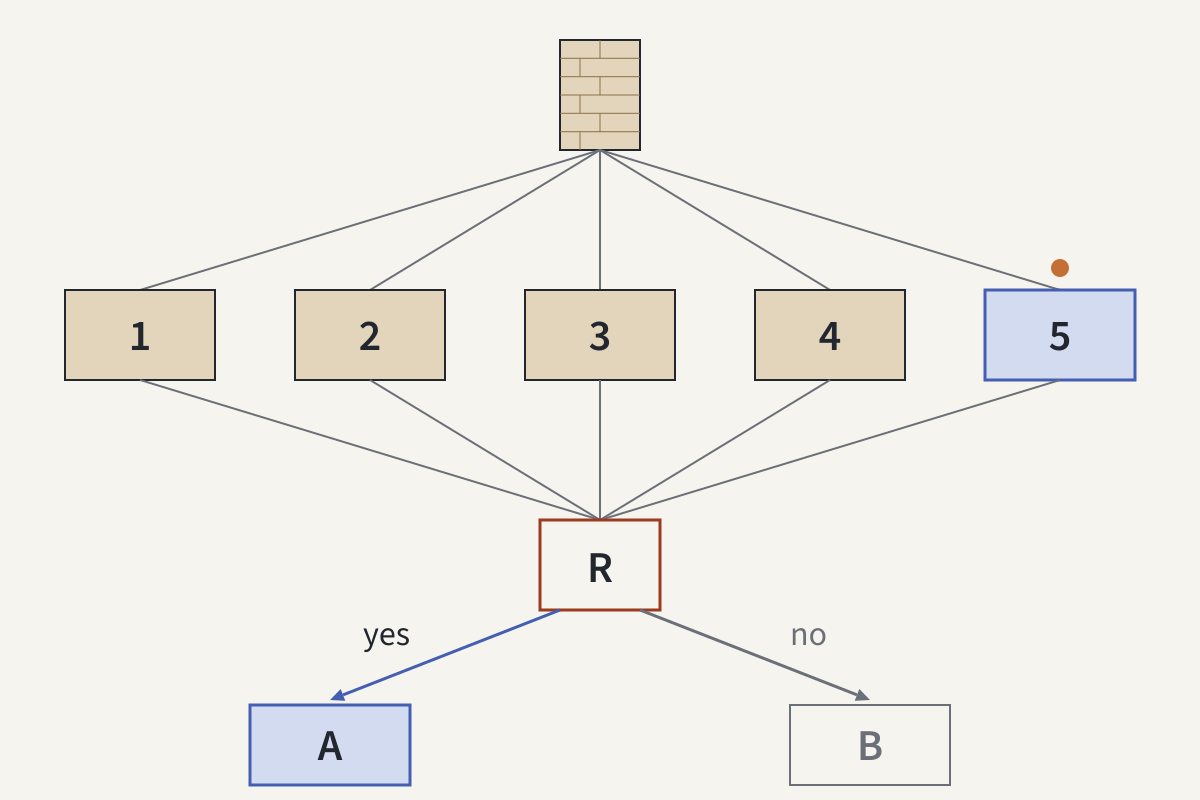
"Possible reasons for a blocked window" by Built, Mapped & Planted, https://builtmappedandplanted.com/details/window-tax/ — CC BY 4.0, https://creativecommons.org/licenses/by/4.0/
Data: Reading for this page; for the tax branch, the records check follows the ghost ordinance definition page of Built, Mapped & Planted
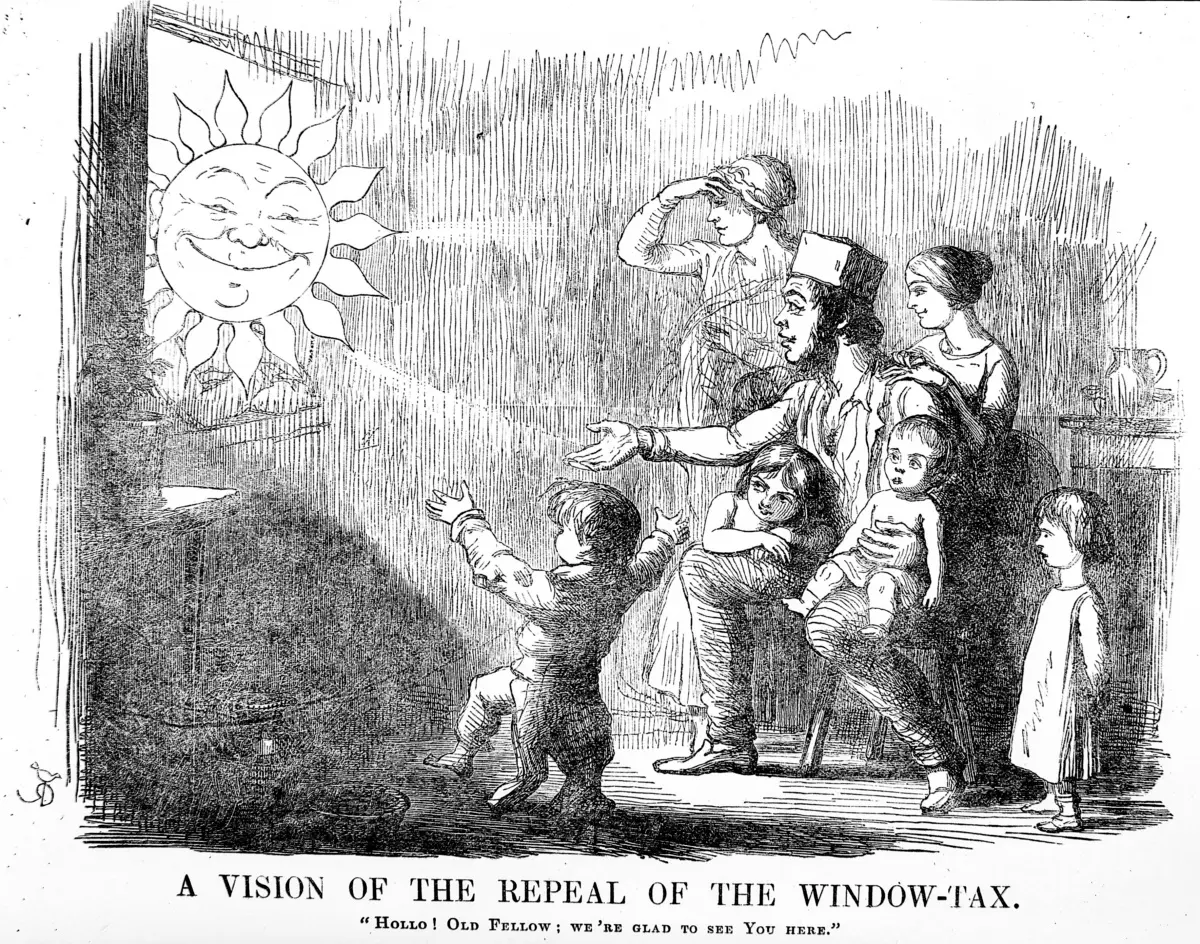
"A Vision of the Repeal of the Window Tax" by Wellcome Library, London. Wellcome Images — https://commons.wikimedia.org/wiki/File:A_Vision_of_the_Repeal_of_the_Window_Tax._Wellcome_M0012506.jpg — CC BY 4.0 (https://creativecommons.org/licenses/by/4.0/); modified: resized to 1,200 px wide
The drawing sorts the possible reasons behind one blocked window, with the tax as only one branch, and sends every branch through the records of the house. The picture is a caricature titled A Vision of the Repeal of the Window Tax, in which a smiling sun shines into a crowded room.
Basis Possible reasons stated as a reading for this page, not taken from any source; for the tax branch, the records check follows the three conditions set out in the last section.
Legend: letters and numbers on the drawing
- 1 a staircase rising behind that part of the wall
- 2 a chimney flue or fireplace behind it
- 3 an opening built blind so that the front looks balanced
- 4 a later change of layout or use inside the house
- 5 the window tax
- R the records of that house: when it was built or altered, and why
- A cause documented
- B cause unchecked
Count the windows across a terrace of old brick houses, then count the ones painted on or filled with brick. A filled opening is easy to read as evidence of the window tax, which once charged a house in steps by the number of its windows. The statutes record what the tax charged and when it ended, but not why a particular window was closed. On that question, a single wall is only the start of the evidence.
How was the tax counted?
The tax began as a remedy for a loss in the national coinage, not as a policy about buildings. The Statutes at Large, in the edition printed in 1763, reproduces the act of 1696 (7 & 8 Will. 3, c. 18) only as a summary, with a margin note that a later act of George II's reign repealed it. That summary identifies the measure as an act “for granting to His Majesty several Rates or Duties upon Houses, for making good the Deficiency of the clipped Money.”
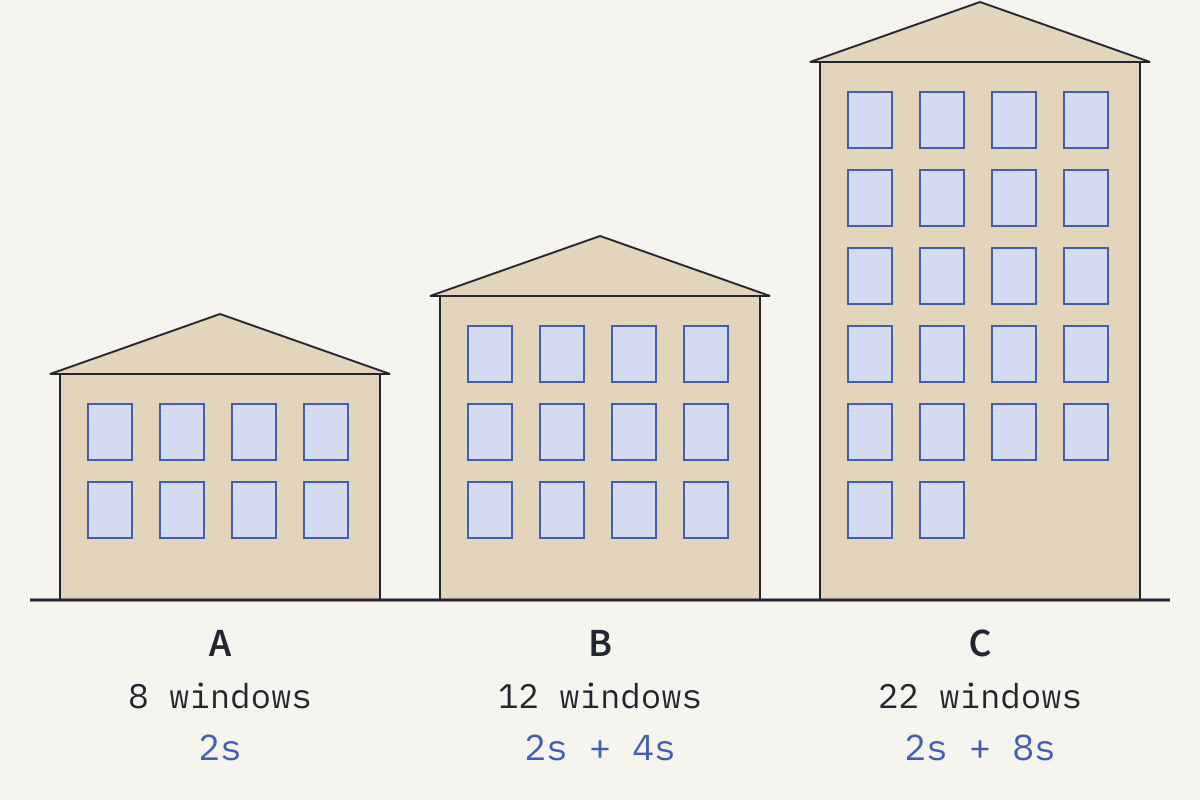
Three schematic fronts, not real houses, with the duty each would owe if the printed summary of the 1696 act is read as steps at ten and twenty windows. The house with 8 windows pays only the 2s due on every inhabited house.
Basis Rates from the summary of 7 & 8 Will. 3, c. 18 in The Statutes at Large (1763), vol. 3, p. 604, read as applying from ten and from twenty windows upward, with the 8s above the 2s; the window count sets each payment.
Legend: letters and numbers on the drawing
- A a house with 8 windows
- B a house with 12 windows
- C a house with 22 windows
"Three schematic house fronts under the 1696 duty" by Built, Mapped & Planted, https://builtmappedandplanted.com/details/window-tax/ — CC BY 4.0, https://creativecommons.org/licenses/by/4.0/
Data: The Statutes at Large (London: Mark Baskett, 1763), vol. 3, p. 604, summary of 7 & 8 Will. 3 c. 18; Internet Archive statutesatlargef03grea
The printed rates are brief enough to quote in full: “From 25 March 1696, for seven Years, every Dwelling House inhabited to pay 2s. House with ten Windows to pay 4s. per Annum, above the 2s. Twenty Windows, 8s. per Annum. to be paid Half-yearly.” Every occupied house paid a flat charge, and its window count set anything owed on top.
The counting fell to local officials. The same summary instructs the assessors “to certify the inhabited Houses, and Number of Windows, with the Names of the Inhabitants, and what they ought to pay.” The charge fell on whoever occupied the house, and the window count was recorded beside that inhabitant's name.
| Window band | Yearly duty | Note |
|---|---|---|
| every inhabited dwelling house | 2s | paid half-yearly |
| ten windows | 4s more | “above the 2s” |
| twenty windows | 8s | read as above the 2s |
Download the 1696 rates as printed (CSV) (where this data comes from) Data: The Statutes at Large (London: Mark Baskett, 1763), vol. 3, p. 604, summary of 7 & 8 Will. 3 c. 18; Internet Archive statutesatlargef03grea, read 2026-11-18
A year later, Parliament added a layer of inspection to the assessors' work. An act of 1697 (8 & 9 Will. 3, c. 20, section XVI) allowed officers to be named “for viewing and numbring the several Windows in each House (not already assessed at the Rate of ten Shillings).” With a constable or another parish officer, they could “view and examine whether there be any more Windows” than the assessment showed, “twice in the Year at the least.”
More windows, more tax: the steps
How much was it? Under the 1696 summary, a house with fewer than ten windows paid 2s a year. If the summary is read as steps at ten and at twenty windows, a house with ten to nineteen windows paid 6s, and one with twenty or more paid 10s.
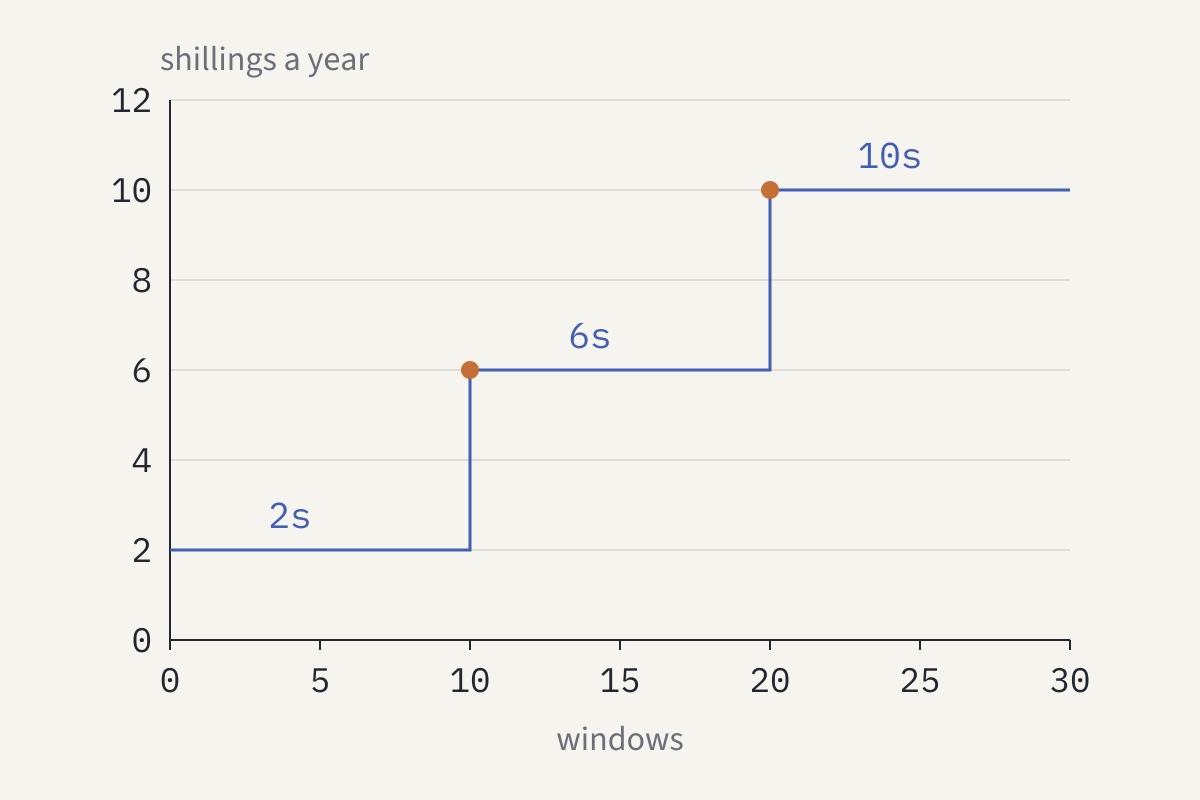
The duty does not rise window by window; it jumps at the two counts the summary names. On this reading, the 10s paid at twenty windows is five times the 2s paid by a house with nine.
Basis Rates from the summary of 7 & 8 Will. 3, c. 18 (The Statutes at Large, 1763, vol. 3, p. 604), read as applying from ten and from twenty windows upward; totals computed from those rates.
"Yearly duty by number of windows, 1696 act" by Built, Mapped & Planted, https://builtmappedandplanted.com/details/window-tax/ — CC BY 4.0, https://creativecommons.org/licenses/by/4.0/
Data: The Statutes at Large (London: Mark Baskett, 1763), vol. 3, p. 604, summary of 7 & 8 Will. 3 c. 18; Internet Archive statutesatlargef03grea
The summary does not state that “ten Windows” means ten or more. Still, the step reading is consistent with the 1697 act, which refers to houses “assessed at the Rate of ten Shillings,” the total that 8s on top of the basic 2s produces. The data table keeps the rates as printed and records the reading in its qualifier column.
On a schedule of steps like this one, a single additional window could matter considerably. On that reading, a house with ten windows owed three times as much as a house with nine. These figures are only the original rates of 1696; later legislation altered the duty, and those later rates are not reproduced here.
When was the window tax abolished?
The duties charged by windows ended in 1851, when Parliament exchanged them for a different measure. The Statutes of the United Kingdom for that year prints chapter 36 of 14 & 15 Victoria, dated 24 July 1851, as “An Act to repeal the Duties payable on Dwelling Houses according to the Number of Windows or Lights, and to grant in lieu thereof other Duties on Inhabited Houses according to their annual Value.”
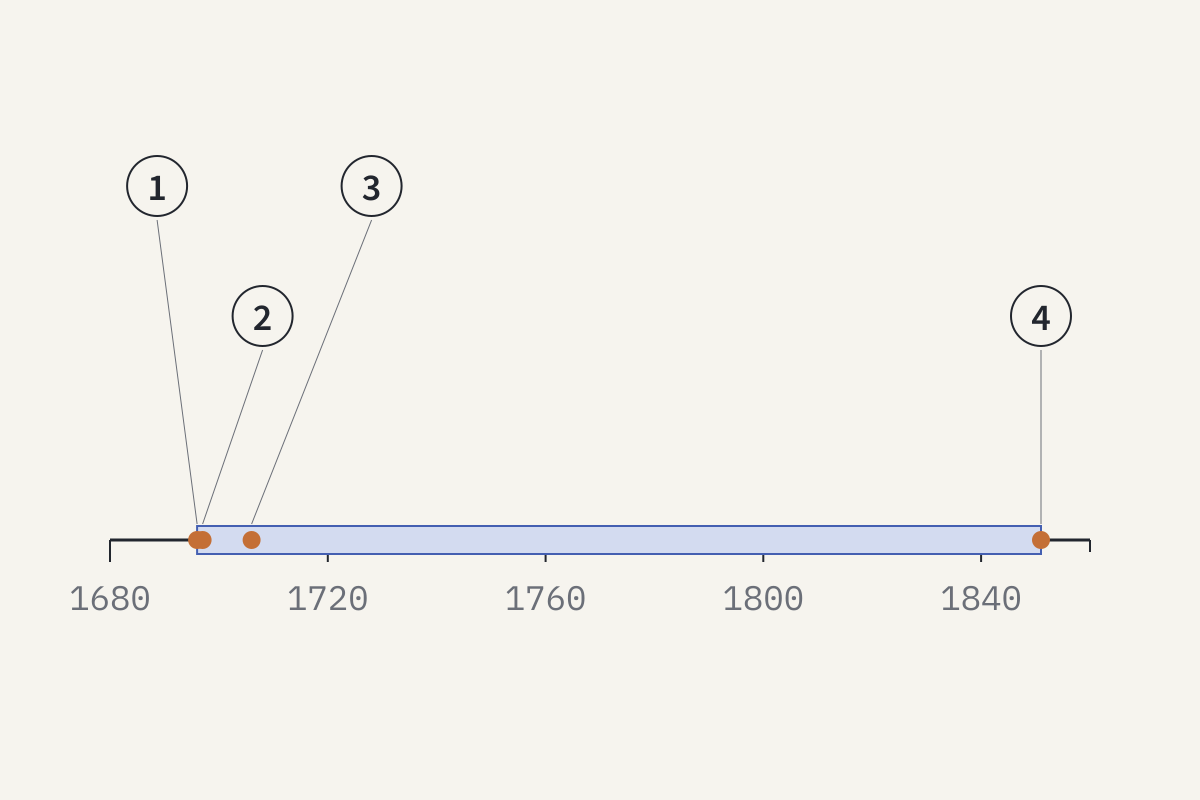
Four dated points in the statutes read for this page, from the first act to the repeal. The shaded band is the span between the 1696 act and the 1851 act.
Basis Dates from The Statutes at Large (1763), vol. 3, pp. 604 and 655, and The Statutes of the United Kingdom, vol. XX (1851), p. 522.
Legend: letters and numbers on the drawing
- 1 1696: 7 & 8 Will. 3, c. 18 grants duties on houses from 25 March 1696, for seven years
- 2 1697: 8 & 9 Will. 3, c. 20 adds officers to count windows
- 3 1706: the same 1697 act continues the house duties until 1 August 1706
- 4 1851: 14 & 15 Vict. c. 36 replaces the window duties with a duty on annual value
"Window duty from the 1696 act to the 1851 repeal" by Built, Mapped & Planted, https://builtmappedandplanted.com/details/window-tax/ — CC BY 4.0, https://creativecommons.org/licenses/by/4.0/
Data: The Statutes at Large (1763), vol. 3, pp. 604 and 655; The Statutes of the United Kingdom, vol. XX (1851), p. 522
The 1851 act did not stop taxing houses; it replaced one measure of a house with another. The new duty on inhabited houses was calculated by annual value from 5 April 1851 in England, Wales and Berwick-upon-Tweed, and from Whitsunday 1851 in Scotland. Section IV states that the duties charged “according to the Number of Windows or Lights” would, from those dates, “severally cease and determine.”
By then the window duties were charged under an act of George III's reign (48 Geo. 3, c. 55), cited in the 1851 preamble, and they applied in Scotland as well. The 1763 summary of the first act already points to later acts for “the Increase and Continuance” of the duties, and those acts were not read for this page. The timeline shows only what the statutes read here say.
Blocked windows that are not about tax
Did the window tax really cause bricked-up windows? The acts consulted here charged a house more at ten and at twenty windows, which gave an owner a financial reason to have fewer of them. They do not record which houses had a window blocked, or when the work was done. A blocked window on a house standing in those years is a candidate for the tax, not evidence of it.
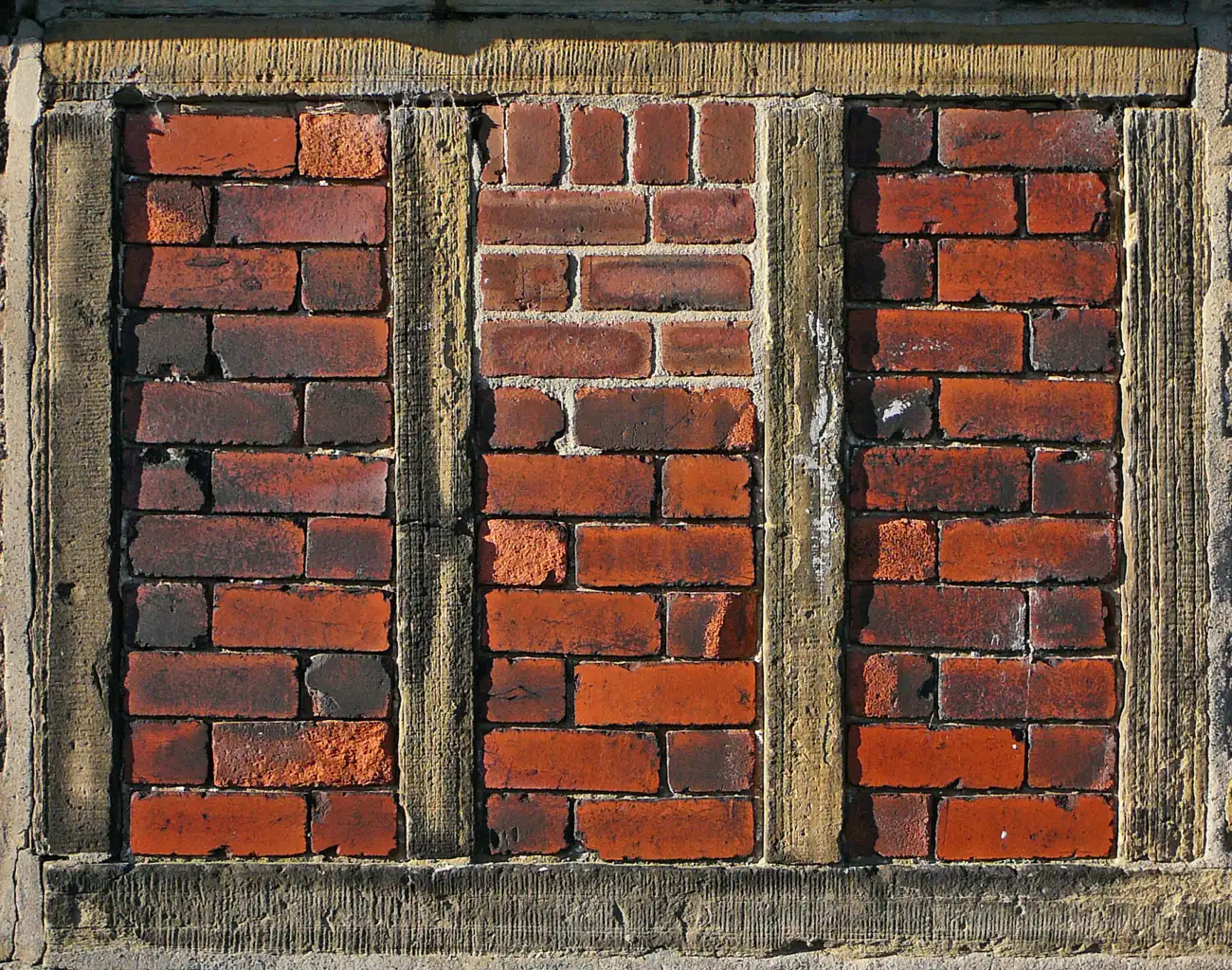
Three lights of a stone-framed window filled with brick, beside the Rochdale Canal at Brearley, photographed in 2010. The photo record gives no date or reason for the filling.
"Bricked-up window by the Rochdale Canal, Brearley" by Tim Green from Bradford — https://commons.wikimedia.org/wiki/File:Bricked-up_window_by_the_Rochdale_Canal,_Brearley_(5212774004).jpg — CC BY 2.0 (https://creativecommons.org/licenses/by/2.0/); modified: resized to 1,300 px wide
Several other causes can produce the same appearance. A staircase built against the inside of a wall can cut across the full height of a window opening. A chimney flue may occupy the space where a window would otherwise sit. A front may also be designed with blank openings so that its windows line up symmetrically, much as columns are sometimes only applied to the wall, more for show than for bearing.
A later owner may also rearrange the interior and close a window that no longer suits the new layout. In the photograph, the stone frame stays and only the openings were filled, which suggests that the blocking came after the frame was built. The photograph cannot give the year or the reason. On other buildings, gargoyles and grotesques raise the same question of what a decorative feature was originally for.
When a blocked window is a ghost ordinance
The ghost ordinance is a physical feature still visible today whose shape, on the evidence of records, was determined by a rule that has since been repealed or replaced. A blocked window qualifies only when such records establish the connection. Without them, the feature is labeled unchecked, however convincingly it appears to fit the story.
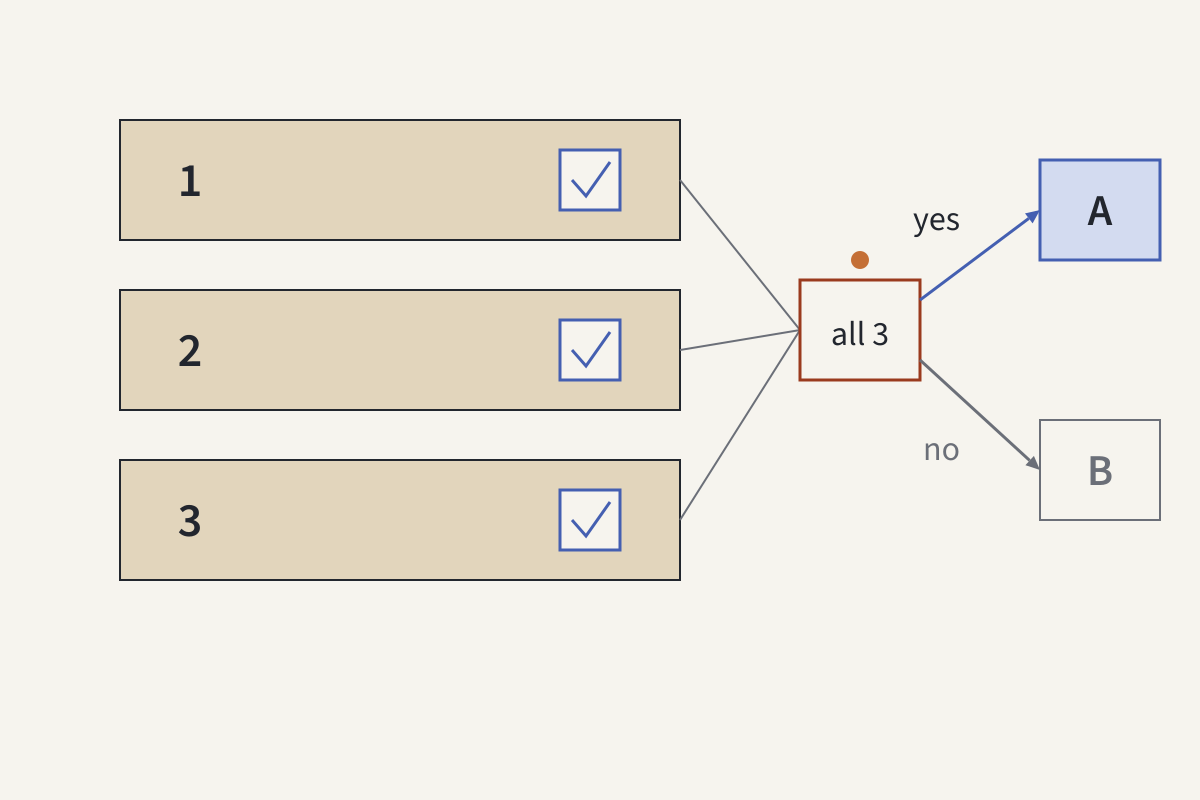
The three conditions for calling a feature a ghost ordinance. Missing any one of them sends the window to B, unchecked, rather than to A.
Basis The three conditions and the records they require come from the ghost ordinance definition page; the window tax dates come from the acts of 1696 and 1851 cited above.
Legend: letters and numbers on the drawing
- 1 the date the house was built, or the window was blocked
- 2 the rule in force at that date, such as the window duties between 1696 and 1851
- 3 a record that links the two, such as a building file or an account of that house
- A a documented ghost ordinance
- B unchecked: the cause stays possible but not proved
"Three conditions for a ghost ordinance" by Built, Mapped & Planted, https://builtmappedandplanted.com/details/window-tax/ — CC BY 4.0, https://creativecommons.org/licenses/by/4.0/
Data: Conditions from the ghost ordinance definition page of Built, Mapped & Planted
How can you tell? The same checklist in words:
- Establish when the house was built, or when the window was filled. A house built after 1851, or a window filled before 1696 or after 1851, rules out the window duties as an explanation.
- Confirm which rule applied at that date. The dates in the timeline above are only the outer limits, and the rates changed within them.
- Look for a record connecting that specific window to the tax, such as a building file or a contemporary account of that particular house. No wall supplies this evidence by itself.
If all three conditions hold, the records document a ghost ordinance. If any one is missing, the window stays unchecked, and an observation from the street can supply only the first clue.
Cite this page
Built, Mapped & Planted. “Window Tax: Not Every Blocked-Up Window Was Dodging It.” First issued 19 November 2026. https://builtmappedandplanted.com/details/window-tax/. Accessed on the day you read it.
Sources
- The Statutes at Large, from Magna Charta, to the End of the Last Parliament, 1761, vol. 3 (London: Mark Baskett, Henry Woodfall and William Strahan, 1763). archive.org/details/statutesatlargef03greaRead: pages 604 and 655 read: the summary of 7 & 8 Will. 3, c. 18 and sections XV–XVI of 8 & 9 Will. 3, c. 20
- The Statutes of the United Kingdom of Great Britain and Ireland, vol. XX, containing the Acts 13 and 14 Victoria (1850) and 14 and 15 Victoria (1851) (London: George Edward Eyre and William Spottiswoode, 1851). archive.org/details/india.history.resource.93…Read: page 522 read: 14 & 15 Vict. c. 36, title, preamble and sections I–IV
How numbers and sources are checkedRedline sheet: all correctionsReport an error on this page (contact@builtmappedandplanted.com)
More sheets in Reading a Facade
A Comparison
Doric, Ionic, Corinthian: Vitruvius Named Three, Serlio Five
Picture credit
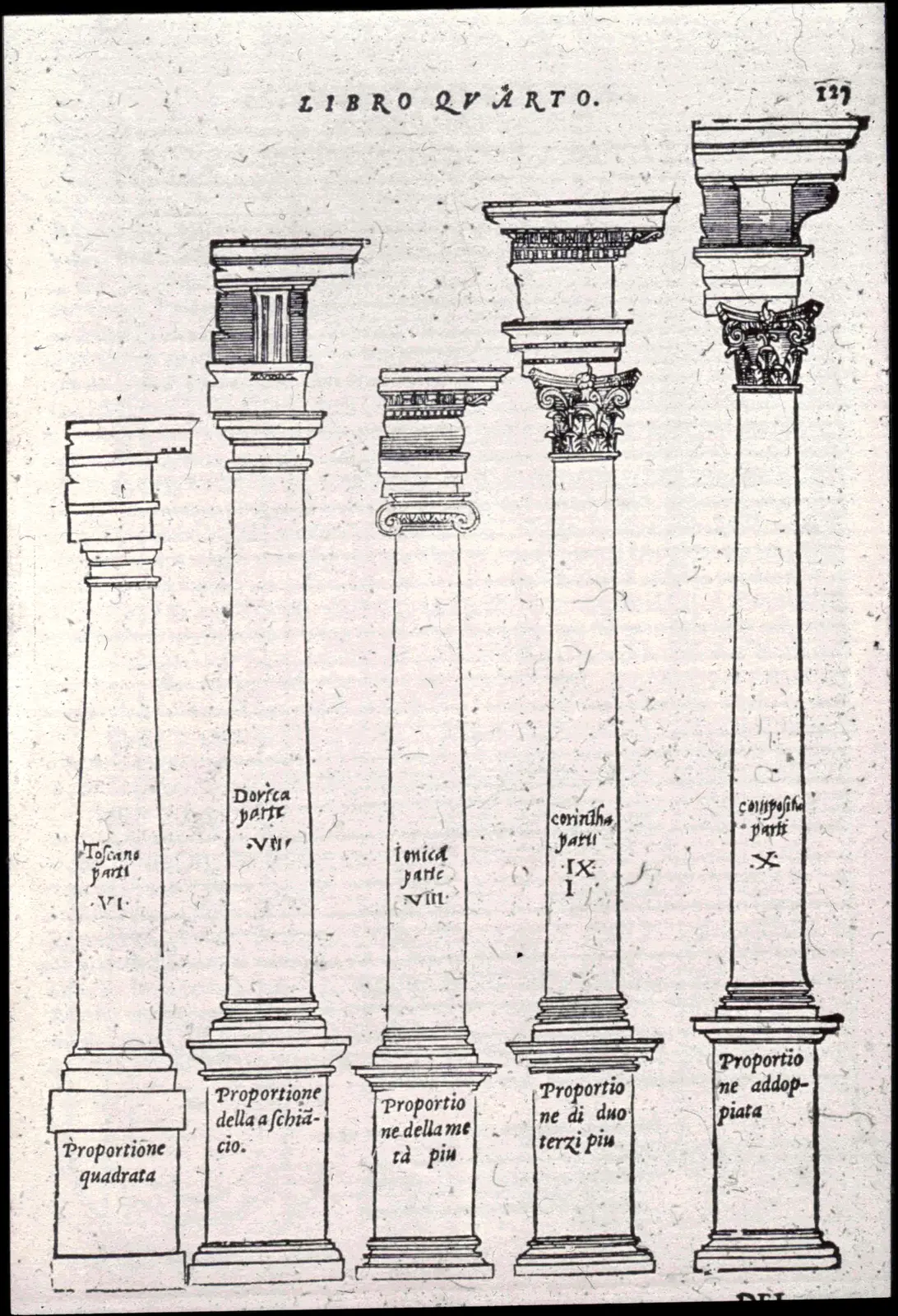
"Ordini architettonici: tuscanico, dorico, ionico, corinzio e composito, from Serlio's fourth book of architecture" by Sebastiano Serlio; slide by Henry A. Millon, Accademia delle Scienze di Torino — https://commons.wikimedia.org/wiki/File:Ordini_architettonici-_tuscanico,_dorico,_ionico,_corinizio_e_composito,_1537_-_Archivio_Accademia_delle_Scienze_Torino,_Millon_66_28_344.jpg — Public Domain (US: published before 1930; EU: author died 1554, more than 70 years ago (life plus 70 years); the scan is a faithful reproduction of a two-dimensional work)
A Field sheet entry
Gargoyle vs Grotesque: Strictly, a Gargoyle Is a Waterspout
Picture credit
"Etchings of Paris: The Gargoyle (Le Stryge), by Charles Meryon" by Charles Meryon — https://commons.wikimedia.org/wiki/File:Charles_Meryon_-_Etchings_of_Paris-_The_Gargoyle_-_1940.889_-_Cleveland_Museum_of_Art.jpg — CC0 1.0 (https://creativecommons.org/publicdomain/zero/1.0/)
A Comparison
Flemish vs English Bond: Headers Every Row or Every Other
Picture credit
"Bricks - Cambridge, MA - DSC08949" by Daderot — https://commons.wikimedia.org/wiki/File:Bricks_-_Cambridge,_MA_-_DSC08949.jpg — CC0 1.0 (https://creativecommons.org/publicdomain/zero/1.0/); modified: resized to 1,300 px wide